A database is a collection of information that is organized so that it can easily be accessed, managed, and updated. In one view, databases can be classified according to types of content: bibliographic, full-text, numeric, and images.

In computing, databases are sometimes classified according to their organizational approach. The most prevalent approach is the relational database, a tabular database in which data is defined so that it can be reorganized and accessed in a number of different ways. A distributed database is one that can be dispersed or replicated among different points in a network. An object-oriented programming database is one that is congruent with the data defined in object classes and sub classes.
In this week we learned about database also we did the case study for ISD methodology presentation as a group activity. It was easy for me because last I had a good understanding in this topic as well as I did so many readings as well. I had to explain about Factory in Cambodia and what are the information systems they are using and which method we prefer as a methodology to implement the system. I should say that it was a good activity because when you are searching for material in Internet you are given a plenty of information and you need to go through and choose the one that explains best. So, in this way you start to understand your topic even if it is quite difficult. It was really useful for me to get better understandings.

We learned that database is the container or a collection of data. And it has four components: data, relationships, constraint, and schema….Database management system: it’s software that create database. For example, Microsoft access and then we learned that DBMS performs five primary functions: define, create and organize a database, input data, process data, maintain data integrity and security (it allows limited access of the database), and query database.

Later on, we moved to the Database system and this is different than data management system, and it is a computer based record keeping system.
We were exposed to the advantages of database system, it improves security, improves data integrity, controls redundancy and efficiency in accessing data.
There are four types of database model: Hierarchical database (organizes data in a tree structure “one to many”), network database (many to many relationship), Relational database (basically a table with rows: representing Field and columns: representing Record), and Object-relational database (quite similar to relational database but this is one is highly object oriented language)

Database Components
- It is Field in data processing and it is a piece of information.
- Schema: it describes the organization of data and relationships within the database. The schema consists of definitions of various types of record in the database, the data-item they contain and the sets into which they are grouped.( known as ERD)

After that. we move to another part. It is about Fundamentals of Database.
Now, i am going to describe what is the meaing of Fundamentals of database?
Fundamentals of Database:
- There are Six terms of fundamentals of database
1/ Field: It is a specific piece or category of data. Such as, a first name, last name, city, state, subject or birthdate. It is in the column of the table.
2/ Record: a group of related fields that describes a person, place, thing or transaction. Such as, customer, student, location, product or sale. ( Row of table)
3/ Key field: a field that contain unique information for each record. Such as, student ID for a student.
4/ Table: a collection of records for a single subject. Such as, student, products or Sales.
5/ Relational database: Multiple table that are linked together to address a business process. Such as, managing timetable, couses and students.
6/ Objects: the part of an Access database that help you view,edit, manage and analyze the data: tables, queries, form, report, macros and modules.
Database Management System(DMS)
It is a software package for manipulating database or database program.
Example of Database Management System(DBMS)
MySQl, Microsoft Access, postgreSQL, SQLserver, Filemaker, Oracle, dBase, Foxpro,Clipper and so on.

Features of DBMS
- Here are three Features of DBMS:
- Allow users to create new database
- Give users the ability to query and modify the data using appropriate language( query language or data manipulation.
- It provides information to the decision makers that they need to make important decision. this information is provided by querying the database using SQL.
TYPES OF DATABASE LANGUAGE
- DDL( data definition language)
- DML(data manupulation language)
- DCL( data control language)

Data manipulation language

DCL( Data control language)

DBMS USERS
- End Users
- Application programmers
- Database Administrator

NEXT SESSION IS STUDY ABOUT DATA MODEL
But before we go to our sup topic, we have to know and understand what the definition of Database Models.
Definition:
- Database model is the structure of format of a database, described in a formal language supported by the database.
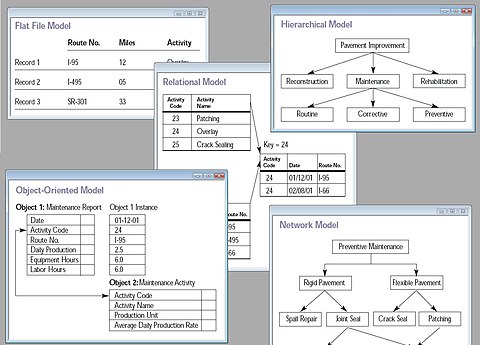
Data model:
- Structure
- Characteristic
- Description
- Organization
These are the basic for building block of data model:
- Entity
- Attributes
- Relationship
The first one is about Entity:
- represent a particular object in the real world( a person, a place, or an event)
- Entities can be thought for as nouns.
- represented in tables
for example: student information system
Entity= student, subject, course, time table, result.
Student:
- Student ID, student name, address and so on.
- Subject: code, name, hours.
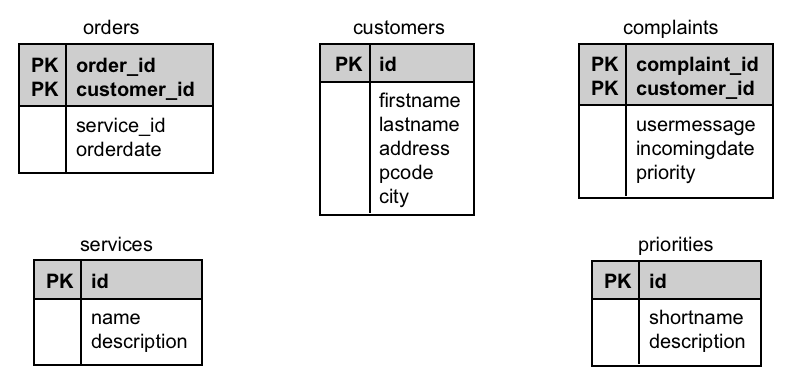
B) Attribute
- Characteristic of an entity
- attributes that help to identify the entity.
- Respresent by colum in table.
For example: student information system:
Student: ID, Name, Address

C) Relationship
- Describes an relationship among entities
- These relationship can be shown in the form of diagram
- entity relationship diagram(ERD)
- Data model use three types of relationships
- 3 forms of ERD
- One to one. eg: student ID for a student, passport..


- one to many. eg: Mother and children.. that mean, one mother can have alot of children. but children can not have alot of mother.
- Many to many: eg: luctuerer and students. lucturers can have many students and students also can have many lucturerers.

TYPES OF DATABASE MODELS
Here are 4 types of Database Models
- Hierarchical database
- Network database
- Relational database
- Object-relational database
1) Hierarchical Model

- Hierarchical Model was developed in 1960s by IBM company(IMS)
- The hierarchical data model organizes data in a tree structure.
- structure contain levels or segment( like organizational chart)
- May establish one to many relationship.
Network database:
Definition: The network model is a database model conceived as a flexible way of representing objects and their relationships. Its distinguishing.
- Improvement from hierarchical model. Data are represented by records suring links among them
- it can relate to many records
- the network model structure allows for many to many relationship.

Relational Database:

We use data Model for:
- organization's primary goals and requirements
- The volume of transaction/information organization.

No comments:
Post a Comment